
Kelsey Parker stood at the podium in the Mississippi State Capitol rotunda in January and shared her story with reporters, legislators, and other advocates for recovery.
For Kelsey, after more than 15 years of active addiction to a range of illicit drugs, and after many attempts at abstinence, she found a path to a healthy life through Mississippi’s medical marijuana program. Don’t stop reading yet!
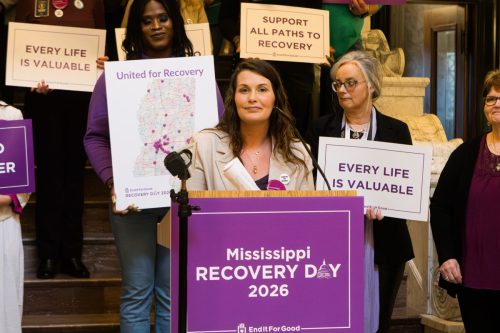
I know that many people define recovery as complete abstinence, but we’re inviting you to think about the goal of recovery, not the tool used to get there.
If you heard Kelsey’s full story, I think your heart would break over the harm done to her in each season of her life. Abuse is never the survivor’s fault. She takes responsibility for the unhealthy choices she made during those years, but the day-to-day reality of her life was that every time she tried to quit drugs cold turkey, the anxiety and flashbacks to abuse would come roaring back, and she’d use again to keep them at bay.
It’s worth taking a moment to reflect on how unhelpful it is to tell people with Kelsey’s experience to “Just stop using drugs!” Kelsey couldn’t function well with the drugs, but she also couldn’t function well without them. It’s no wonder she describes how she felt at that time as “hopeless.”
Mississippi’s medical marijuana dispensaries opened their doors three years ago this month, and there are now over 67,000 registered patients in the state. Unfortunately, addiction is not a qualifying condition for the program. Fortunately for Kelsey, she had another medical condition that qualified her.
She began using cannabis from a legal dispensary, and was able to stop using all the other drugs that were causing so much harm in her life and family.
You may be thinking what I was thinking as I listened to her story: “If marijuana helped you stop using the other drugs, why didn’t you just buy it on the underground market years ago?!” I asked her about that.
Turns out, she did buy it during those years, but the same dealer that sold marijuana also sold meth, and it wasn’t until she was able to buy marijuana from a legal business that she could disentangle her life from the underground market.
I can’t overstate how important this reality is. The more we incentivize people to try out the illicit market by banning more and more drugs (which just pushes them underground), the more we expose them to the chaos, contamination, and crime that come with that market.
Kelsey has been able to rebuild her life using medical cannabis (cannabis and marijuana are the same thing). She’s happily married, goes to work every day, attends family gatherings, and is rebuilding her relationship with her kids. Isn’t this the goal of recovery – a healthy, thriving life?
Why do we spend so much time focusing on which tool someone uses, instead of aiming for a healthy, thriving life and helping them access a range of tools to get there?
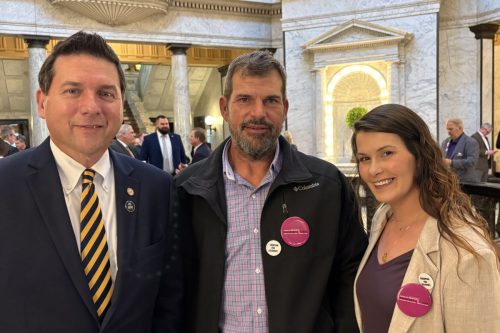
People should never feel ashamed of making healthier choices. They should never feel less-than because the tool they used to restore their health is different from what we expect.
Our hope is that it becomes socially acceptable to use whatever recovery tool works, no matter how unconventional.
Kelsey’s story illustrates two key ideas we believe at End It For Good:
There are many tools for recovery and the focus should be on a healthy, thriving life, not the tool someone uses to get there.
Underground markets are deeply harmful to society in a host of ways. They incentivize crime, lack quality control of products, and have no consumer protections.
Medical marijuana isn’t the solution for every addiction, and legal markets don’t solve all problems. We’re looking for better solutions, not perfect ones (there are none), and I hope Kelsey’s story encourages you to think bigger and broader about recovery and reducing harm.
End It For Good had the honor of helping Kelsey get her recovery story published here, and a text she sent me the day it came out won’t leave my mind. She said, “You know I just never thought I was worthy or good enough or could be anything more than what I was!”
What we believe about recovery affects individuals like Kelsey. It has the power to give hope, save lives, and restore families. And the ripple effect benefits all of us.