
In our last blog post, we highlighted the incredible decline in cigarette smoking, from 42% of US adults in 1965 to less than 10% today. But cigarettes are not the only legal drug hitting historic lows in adult use. Alcohol is too.
Gallup has been tracking alcohol consumption in the US since 1939, and it hit a record low of 54% in 2025. As with cigarettes, we have a legal drug whose consumption is being influenced without prohibiting the drug or arresting consumers. Nicotine products and alcohol are handled in legal, regulated markets. Not perfect markets, by any means, but workable legal ones that aren’t enriching criminal organizations.
We’ve been so conditioned to think that if something is legal, people will always use more, more, more. The data shows that’s not true.
We’ve also been conditioned to use a substance’s legal status as an indicator of whether or not it might be harmful. A lot of adults grew up in a culture that was far more scared of marijuana or LSD or mushrooms than alcohol. But you’ll see on Dr. David Nutt’s scale of harm from drugs, alcohol has the highest potential combined harm to others and self of any popular drug.
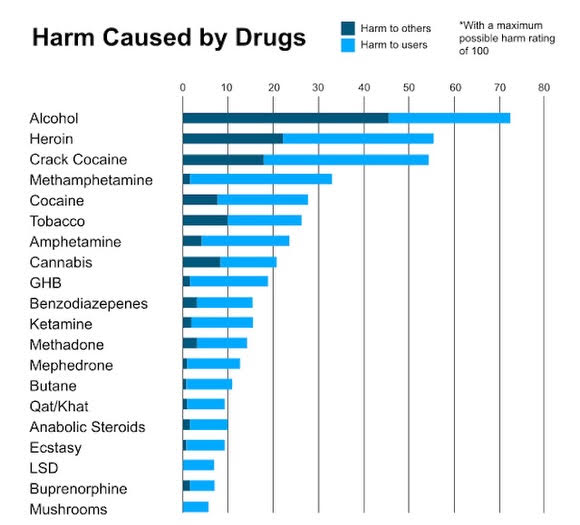
Even if the recent reduction in alcohol use is in part due to an increase in cannabis use, that’s a collective win when looking at overall harm.
It’s crucial that we break out of the knee-jerk reactions to ban every drug that can cause harm, but we also need to take seriously the real risks of substance use. Alcohol should be legal and regulated, but it can still be really harmful. Learning to hold this tension is critical for ending the war on other drugs wisely.
The good news is that we don’t have to choose between ignoring the harms of drugs and fighting an unwinnable war against them.
By being honest about risk and committed to finding solutions that work, we can create a future where fewer people are harmed and more people have the opportunity to heal.