An Introduction to End It For Good

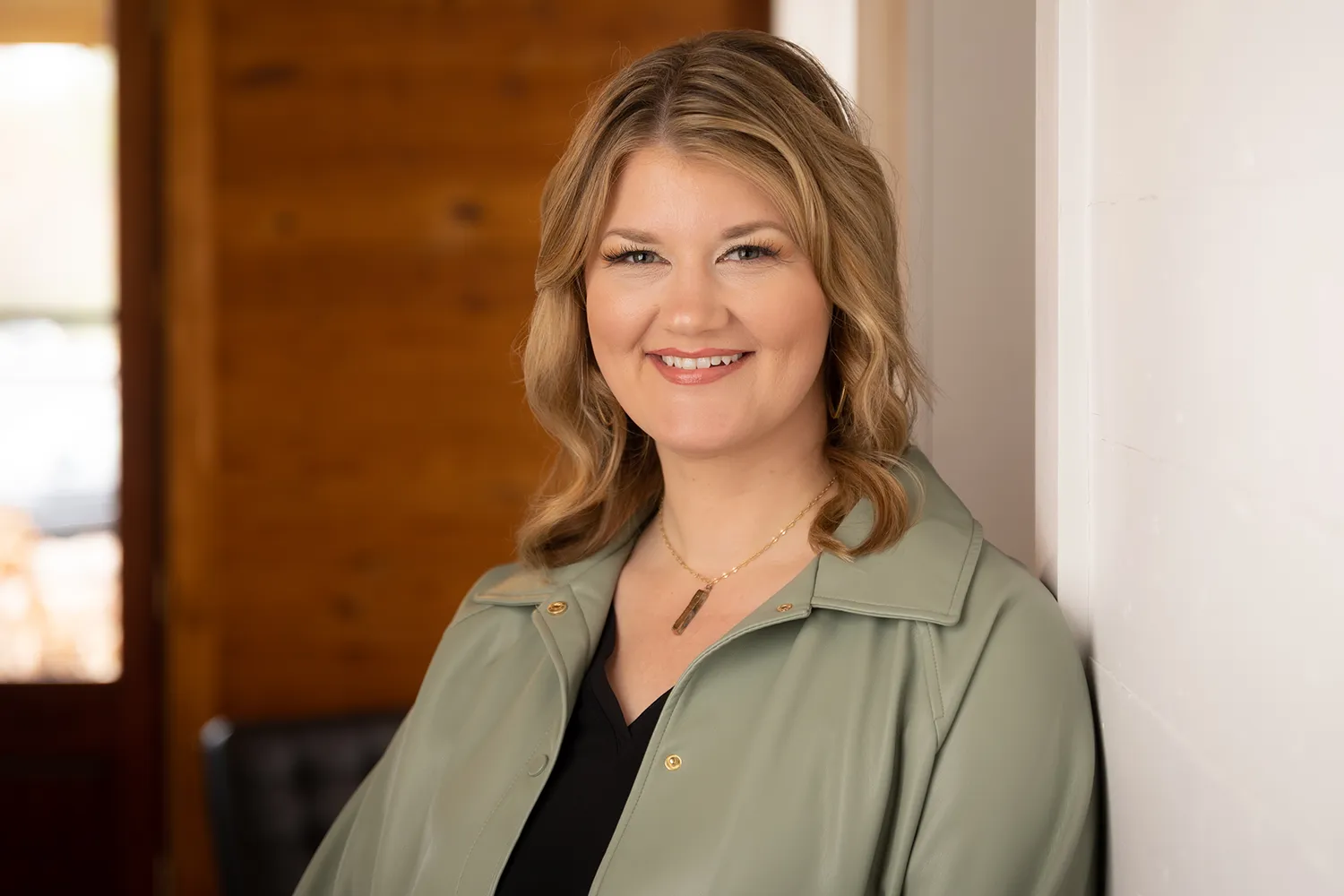
America views addiction as a criminal justice matter, and it’s not working for anybody. In this powerful video, founder Christina Dent presents an alternative approach and the foundational mission of End It For Good.

Continue reading

A closer look at Oregon’s decriminalization policy…

A couple of weeks ago I got a request from a reader for my thoughts on Oregon and their recent changes to drug policy. This is a longer newsletter, but it’s an important topic and one of the biggest issues right now regarding how we approach drugs and addiction.

In November of 2020, Oregon voters passed Measure 110, which ended criminal penalties for low-level drug possession. Since then, Oregon has come under immense scrutiny for this policy shift.

So did Oregon voters do the right thing in 2020, and should other states follow? Or did they make a terrible mistake that we should all learn from?

I’ve read cases from both sides that offer lots of statistics in their favor. There’s a stat for any point you want to make, no matter what side you fall on. But I don’t think you need stats to make a decision on whether decriminalizing drug possession is the best way to go. Here’s why…

Should someone be arrested just because they’re in possession of a certain substance? Some people say that an arrest is what people need to help them change. It’s a shock to the system that will put them on a healthier path, or so the thinking goes.

Let’s think about what an arrest for drug possession is most likely to do for two categories of people: People who aren’t addicted to the drug they’re in possession of and people who are addicted to it.

People who aren’t addicted to a drug don’t need an intervention, and certainly not a nuclear option like criminal justice involvement. It’s easy to see this when we think about legal drugs like alcohol. People who have a couple of beers on the weekend or a glass of wine with dinner are using a drug — but they’re not addicted to it.

For someone who is not addicted, an arrest poses far more danger than alcohol because an arrest can expose them to abuse in jail, loss of employment, their kids being put in foster care, loss of housing, etc. Each one of those outcomes can have years-long impacts on health and well-being, which affects the whole family and community.

Arresting someone for drug possession who is not addicted is perhaps the best way to destroy their life, not improve it.

People who are addicted to a drug may be helped by some sort of intervention, but an intervention that increases trauma in their lives is the worst possible thing we could do for them. We know now that trauma is one of the biggest risk factors that makes a person susceptible to developing an addiction, yet arrest and incarceration are incredibly traumatic.

For instance, the period of time when a person is most likely to be sexually assaulted while incarcerated is in the first 72 hours. We’re forcing people who are likely already in need of healing from trauma into a traumatic environment, and then scratching our heads when it doesn’t solve their addiction.

Incarceration is the perfect environment to tip a non-addicted person into addiction or deepen the struggle of a person already suffering. It’s a spectacular backfire.

For some people, personal freedom is why they think arresting people for drug possession is wrong. The government should not be policing what we choose to ingest. That’s a valid reason, but I want to highlight that whether or not you’re ideologically motivated, arresting someone for possessing a drug is a terrible way to improve outcomes and a great way to destabilize lives. I think most of us would agree that’s the opposite of the goal.

Oregon did the right thing by removing arrest as a response to drug possession. Two factors people point out as evidence that Measure 110 should be reversed are rising overdose death rates and the homelessness crisis.

First, the overdose crisis is a contamination crisis — and decriminalizing possession doesn’t fix that at all. It can’t. Only opening avenues for consumers to access quality-controlled drugs can address the contamination epidemic. Decriminalizing possession can keep people out of jail, but it can’t keep them from getting contaminated drugs and dying.

Second, people living on the streets is a heartbreaking problem. It’s incredibly hard on the health and well-being of the person who is unhoused, and it’s incredibly hard on the surrounding community.

One important thing to remember is that homelessness is also a problem in cities across the country where they have not decriminalized possession of drugs. It’s not unique to Oregon. But it is a huge problem.

A key distinction to make is that decriminalizing drug possession does not mean decriminalizing all behavior of people who use drugs.

With any policy or approach, there’s a danger of the pendulum swinging too far. After years of locking people up for minor drug infractions, we risk swinging all the way to the other extreme and not arresting anyone who uses drugs, even if they’re committing other crimes. Neither extreme is good or in the interest of public safety. A healthy society is not a lawless one.

For instance, if a person engages in theft, they should be arrested — even if the root cause is their addiction. This is where drug courts might be most helpful. They can provide accountability and justice after a legitimate crime while also addressing the core problem.

Drug courts may also be a good option for other behaviors that break the law or city ordinances where addiction is the real problem. I’m aware that drug courts aren’t perfect, but they can be a helpful tool when the criminal justice system needs to be involved.

As with almost everything in life, extremes are unhelpful, and real solutions lie on a nuanced path somewhere between.

So how does this solve homelessness? It doesn’t. Arresting people might help the community feel good that “something is being done,” and it removes the person from view for a short time, but it’s not a solution. The community doesn’t want to just feel good, they want problems solved.

If anything, an arrest just compounds the harm in a person’s life, making it even harder to rebuild when they’re ready to take that step. We can’t arrest our way out of addiction, and we can’t arrest our way out of homelessness.

I don’t know the answer to ending homelessness, but there are programs like Community First! Village in Texas that are successfully helping people who’ve been chronically unhoused find community, purpose, belonging and permanent homes. They’ve got a lot more answers than I do, but just because the real solutions are hard and complicated doesn’t mean we should fall back on failed ones.

Study Shows Mom Might Be Best Medicine for Opioid Dependent Babies

I was standing next to the water fountain at the Mississippi Agricultural Museum when the person I was chatting with mentioned an article they just read. In the article, babies who were born dependent on opioids because of their mother’s opioid use were being treated in an entirely new way. Instead of being separated from their mothers and put in a bright, loud NICU before being whisked into foster care, they were kept with their moms in private, low-stimulation hospital rooms. Moms were taught how to swaddle and soothe their babies and encouraged to practice skin-to-skin contact and breastfeeding. Giving the baby opioids to help them through withdrawal was a last resort. Mom was the primary medicine. The results were striking. Babies were getting through opioid withdrawals faster, using less opioids post-birth, and leaving the hospital days earlier.

This conversation was in 2015, but I remember it so clearly because my heart started pumping faster, my blood pressure shot through the roof, and I was overcome with anger. Intense emotional experiences tend to imprint themselves in our memory. My response in the conversation was swift and strong. That article couldn’t possibly be true, I retorted. Right then my family was fostering a baby who’d been removed from his mom’s custody because she was using drugs while she was pregnant. Even though I had no data to support my anger, the results in the article called into question whether our involvement was truly in the best interest of that precious baby’s life and health. That was too hard to consider when our family was deeply invested. I wasn’t getting up at all hours of the night to feed a newborn for nothing! I guess it’s human nature that when we hear an idea that conflicts with something we’re invested in, our knee-jerk reaction is to shut it down.

But I continued to hear about this bonding approach to opioid-dependent newborns, and last week the National Institutes of Health released a report on a study of 1305 infants across 26 US hospitals. The “Eat, Sleep, Console” (ESC) method, very similar to what I heard about in 2015, was studied alongside the Finnegan Neonatal Abstinence Scoring Tool (FNAST) that has been used for 50 years. The results echo what I heard 8 years ago. Newborns in this study who received the ESC approach to their opioid dependance were ready to be discharged from the hospital 6 days earlier than babies whose care was determined using FNAST. The ESC babies were also 63% less likely to receive opioids as part of their post-birth care. For a lot of these babies, what they needed most was mom.

On the one hand, we have a promising new approach to opioid-dependent newborns. On the other, some jurisdictions across the country arrest women who use drugs while pregnant. I’ll give the benefit of the doubt to people who advocate a punitive approach and assume they truly believe scaring mothers will help babies. But is prosecution or prenatal care the best way to protect the life and health of unborn children whose mothers are struggling with addiction? Responses that feel good and responses that do good aren’t the same thing.

If a woman is afraid that a doctor’s visit will land her in prison, that momma won’t go anywhere near a doctor for as long as possible. Even worse, it seems that the impact these prosecutions are most likely to have on unborn children is incentivizing women struggling with addiction to have an abortion. If they give birth, they could end up in prison. If they have an abortion, they won’t. What a tragedy.

It’s hard to rethink something we’re deeply invested in. It took time for me to get over my initial anger at what felt like a threat to my role and instead embrace curiosity for the best path to healing for vulnerable babies. Change is hard, but if we want addicted moms to make healthier choices early in their pregnancies, we have to broaden the path to help not handcuffs. And if we want to give babies born dependent on opioids the best chance to recover quickly and suffer less, mom might be the best medicine out there.

No, don’t bomb Mexico…

Recently, I’ve heard political rhetoric that says we can lay blame for the fentanyl crisis on Mexico and the cartels — AND we should take direct military action against them.

If you’re interested in learning more about these talking points, Politico published an article highlighting the issue. You can read it here.

My thoughts are…

No, don’t bomb Mexico.

Here’s the thing: Humans like making money. When we forced the market for so many drugs underground through prohibition, we basically took a massive pile of consumer cash away from legal businesses and put it in a big pile. Only people who break the law can get it, and the more ruthless they are, the more cash they can get.

We’ve been wringing our hands and raging against the people who looked at that pile of cash and said, “I’d like some of that.”

Drug prohibition doesn’t fight crime … it creates a huge cash incentive to engage in it. Cartels aren’t the core problem and going to war with them will solve absolutely nothing. We’re at war with our own laws. Until we change them, fentanyl and the overdose crisis are here to stay.

I try to give people the benefit of the doubt, even people who disagree with me, but it fails logic, experience, evidence and common sense to think that somehow launching a full-scale war with cartels is going to beat the laws of supply and demand once and for all.

Fentanyl is in the street drug supply because, as a country, we refuse to allow adults to make a broader range of choices about their drug use.

The cartels are simply responding to the financial incentives the law has put in front of them. If we want to show how serious we are about fighting fentanyl, we have to look inward at our laws, not outward at the people taking predictable advantage of the incentives the laws set up.

That’s why I’m so passionate about the work End It For Good does. We want to show people that if we change our laws and bring drug markets and consumption back into the rule of law rather than the free-for-all of prohibition, crime — as well as overdoses — could be significantly reduced.

There’s a seat at the table for you…

Two weeks ago I got a call from Patrick (name changed to protect his privacy), a young man I interviewed almost 3 years ago for my book. He’s been in a Mississippi prison for 4 years on a nonviolent drug charge.

In spite of having no behavior problems since his incarceration, he was denied parole last year. He’s one of 4,405 people in Mississippi prisons serving time for a nonviolent drug charge today. One year ago that number was 3,105.

That’s a 41% increase in just 1 year. That’s staggering.

While it’s not clear yet what’s driving such a significant increase, we hope more people will urge leaders to pursue health-centered approaches to drugs rather than criminal justice ones.

Are you looking for an opportunity to do just that? If you’re between 18-35 years old, check out the Young Voices info in the “Opportunities” section below.

My call with Patrick was short, but he gave me a quick update on his life behind bars and his fears for his physical safety after watching several men get beaten up in the last few weeks.

Incarceration is necessary sometimes, but as one police chief told me, it has a very narrow scope of usefulness. When it’s used outside that scope, it compounds problems instead of solving them. The crucial question before us is whether drugs and addiction fall into that scope of usefulness, or whether incarceration compounds harm instead.

I think you know where we stand, but there’s a seat at the table for you no matter your perspective.

How many more do we have to lose?

Yesterday I gave a presentation to graduate students, and one of them made a comment that struck me. She mentioned that her family was deeply impacted by addiction as well as death from overdose, and my presentation made her wonder, “How many more do we have to lose before we stop ignoring what’s happening?” Ignoring these problems won’t solve them, and neither will doubling down on strategies that have proven to be ineffective or make matters worse.

We can pursue solutions now that help more people stay alive and have an opportunity to build a thriving life.

Last year these solutions gained momentum, in large part because so many of YOU made the movement your own. You shared the message, invited us to speak, and connected us with many of the opportunities below. Thank you!

End It For Good – 2022 by the numbers: 

  • 6 opinion articles in local, statewide, and national publications
  • 7 Community Discussion dinner events with over 300 attendees
  • 32 speaking engagements to 8,000 people
  • 48 interviews reaching 300,000 people

A team of five can’t accomplish all of that on our own. The awesome network of advocates made up of YOU and many others are what makes the magic happen!

Looking Forward to 2023:

  • Fentanyl Testing Strips – We hope to see these become available in Mississippi, so people who use a drug can know if it contains fentanyl, a high-potency opioid.
  • Community Discussion dinners – We’ll be hosting several of these around Mississippi this summer. Stay tuned for dates and locations!
  • Drug Policy Summit – In November we’ll host a day-long Drug Policy Summit in Jackson, MS. You can see the highlights of our previous summit here.
  • Book Release – My memoir focusing on my journey from an unconventional childhood to founding End It For Good. I can’t wait for you to read it!
  • Digital expansion – A lot of our work has happened face-to-face, person-to-person through events over the last 4 years. This year we’ll significantly expand our digital platforms and content. If you’re not already engaging with us on social media, we’re @EndItForGoodMS and @ChristinaBDent. Come on over!